In an era where operational efficiency dictates market dominance, manual processes have become the silent killer of growth. Business leaders often find themselves trapped in a cycle of repetitive tasks—from syncing CRM leads to manual reporting and fragmented communication. This reliance on manual intervention not only leads to burnout but introduces human error as an inevitable byproduct of scaling.
A missed follow-up or inconsistent content distribution are symptoms of a deeper issue: the lack of a unified automation layer. This article explores how n8n, a powerful workflow automation tool, can take over these mechanical functions, freeing your strategic resources to focus on high-impact decision-making and revenue growth.
The Strategic Need for Workflow Automation in Modern Enterprises
The cost of human capital is rising, and finding specialized talent for repetitive data management is increasingly difficult. The time an executive spends on micro-management or manual reporting is time stolen from strategic scaling. Without a systematic automation structure, high-value leads generated through expensive marketing campaigns often fall through the cracks due to delayed follow-ups.
Automation is essentially the creation of a “digital workforce” that operates with 24/7 precision. For organizations in a growth phase, transitioning from manual oversight to automated workflows is not just an optimization—it is a prerequisite for survival. Automation layers act as the glue between your disparate software stacks, ensuring operational harmony across departments.

What is n8n and How Does it Redefine Business Logic?
n8n is an extensible, fair-code workflow automation tool that allows you to connect various applications through a node-based visual interface. Unlike SaaS-only competitors, n8n’s primary strength lies in its self-hosted deployment model. This allows organizations to maintain absolute data sovereignty, keeping sensitive business logic within their own private infrastructure.
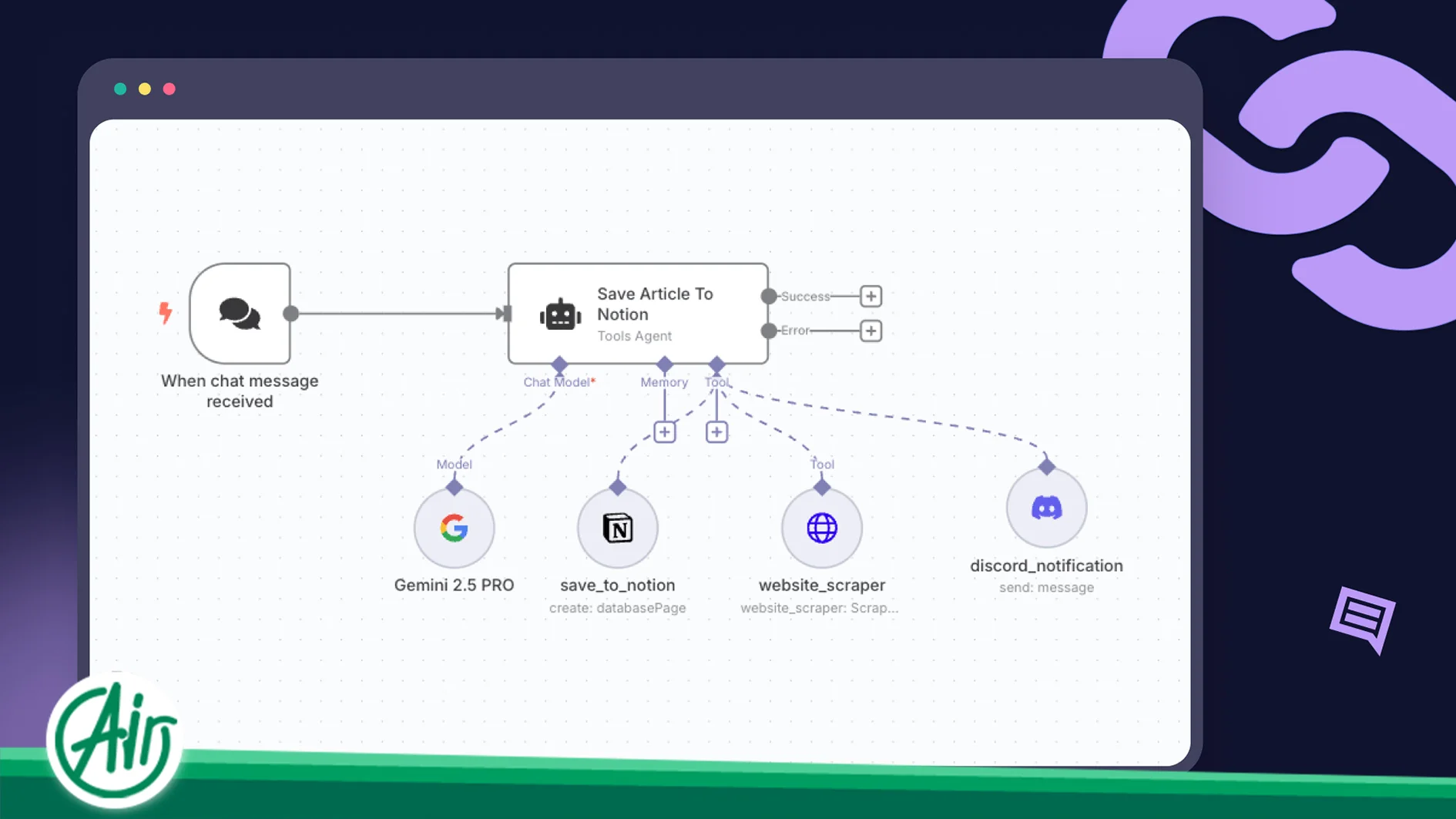
By utilizing n8n, you design sophisticated scenarios that begin with a specific trigger and execute a sequence of multi-step actions. For instance, a new order placement can trigger an inventory update, notify the warehouse via Slack, and send a personalized tracking link to the customer. Because n8n is self-hosted, choosing a high-performance Serveur dédié is the gold standard for large-scale operations, ensuring dedicated resources and zero latency for complex mission-critical workflows.
7 Real-World Automation Scenarios with n8n
The true power of n8n is realized through its practical application within a business ecosystem. Here are seven key scenarios that can exponentially increase team productivity:
1. Lead Routing and Instant CRM Integration
When a prospect fills out a contact form, response time is the primary driver of conversion. n8n can automatically extract this data, register it in your CRM (like Salesforce or HubSpot), and immediately notify the relevant sales representative via instant messaging. This ensures no sales opportunity is lost to human delay.
2. Intelligent Follow-Up Sequences
Most sales are closed during the second or third follow-up. n8n can execute a logic-based sequence: if no purchase is detected within 48 hours of an invoice being issued, the system sends a personalized nudge or a time-limited discount code. This automated persistence significantly improves conversion rates.
3. Automated Executive Reporting
Data-driven decisions require real-time visibility. Instead of waiting for manual end-of-day reports, n8n can extract sales, inventory, and transaction data directly from your databases and deliver a comprehensive dashboard summary to the executive’s inbox every night.
4. Cross-Platform Social Media Orchestration
Managing multiple platforms is a major time sink. You can centralize your content calendar in a single source of truth, and n8n will handle the scheduled distribution across LinkedIn, X (Twitter), and Instagram. Integration with AI models can even generate platform-specific hashtags and captions.
5. ERP and E-commerce Synchronization
Manually syncing web orders with accounting software or ERP systems is prone to error. n8n creates a real-time bridge for financial data. To manage this high-frequency data exchange, utilizing a robust Virtual Private Server provides the necessary uptime and stability for your automation infrastructure, eliminating the risk of network-induced data gaps.
6. AI-Driven Customer Support Automation
By connecting n8n to Large Language Models (LLMs), you can build a support layer that analyzes incoming tickets or messages and provides accurate, human-like responses based on your internal documentation. This reduces the burden on support staff and decreases average resolution time.
7. Proactive Infrastructure Monitoring
n8n can act as a continuous sentinel for your digital assets. If your website encounters a technical error or page load speeds drop below a defined threshold, the system immediately alerts the technical team via SMS or automated call, allowing for remediation before the customer experience is impacted.
Optimization: Infrastructure Selection for n8n Deployment
The reliability of your automation layer is directly tethered to the quality of your hosting environment. If the server hosting n8n goes down, every automated business process halts. For a professional deployment, consider the following infrastructure paths:
-
Virtual Private Server (VPS): Ideal for mid-sized businesses seeking a balance between cost and performance. Full root access allows for the seamless installation of all necessary libraries and custom nodes.
-
Dedicated Servers: For enterprises where data security is the top priority and processing loads are extreme. Dedicated resources ensure that heavy database queries or AI processing in one workflow do not impact the performance of others.
-
Optimized n8n Hosting: For leaders who want to bypass the technical complexities of Docker configuration and security hardening, a pre-configured n8n Serveur en nuage is the most efficient path to deployment. These environments are specifically tuned to handle the high-concurrency demands of complex enterprise workflows.
Technical Deep Dive: Database and Container Management
A professional n8n deployment requires a shift away from default configurations. While the tool uses SQLite out-of-the-box, it is highly recommended to migrate the backend to PostgreSQL for production environments. This ensures transactional integrity and higher performance when running hundreds of concurrent executions.
Furthermore, deploying n8n via Docker simplifies version management and environment isolation. By defining resource limits within your container orchestration, you can ensure the automation layer has sufficient CPU and RAM while maintaining the overall stability of the host server.
Security Architecture and Access Control
When n8n is granted access to your CRM, financial gateways, and internal databases, security becomes the most critical component. All API keys are stored within the instance; therefore, the hosting environment must be hardened. Always enforce HTTPS via reverse proxy and restrict access to management ports to specific IP ranges.
Implementing Two-Factor Authentication (2FA) is a non-negotiable requirement for n8n administrative access. Additionally, follow the Principle of Least Privilege (PoLP) when configuring credentials for various nodes. If a workflow only needs to read from a database, use a read-only database user. This level of technical diligence separates amateur automation from a professional, enterprise-grade infrastructure.
Conclusion – Future-Proofing Your Business Logic
The modern business landscape rewards speed and precision. Relying on legacy manual processes is a strategic disadvantage. n8n provides the power to orchestrate your business logic with the same sophistication as major tech conglomerates. To ensure this system is resilient, your automation must be built on a stable foundation. Investing in a high-quality Dedicated Server or VPS ensures your digital workforce operates without interruption. Scaling your business through systematic automation is the final step in achieving true operational excellence.



 FR
FR  EN
EN  AR
AR  FA
FA  DE
DE